History of Huis St Jan
Huis St Jan was built by the vintners guild of Bruges in the early 15th century. At the time, Damme and Huis St Jan were on the sea making it practical to conduct its wine trade.
Before the house was built, in circa 1290, a learned monk by the name of Jacob van Maerlandt had lived on the site. Jacob van Maerlandt is famous for making the first translation of the bible from the Latin into Flemish. It acquired the name of Rijmsbibbel or rhyming bible as he produced his translation in verse.
On 4th July 1468, the marriage of Margaret of York and Charles the Bold took place in the main hall of the house. The marriage became the most famous of the fifteenth century marking the switching of allegiances between Burgundy and its traditional ally, France, over to England. Following the nuptial ceremony in Huis St Jan, Margaret of York and Charles the Bold’s wedding celebration continued for 12 days in Brugge, and wine allegedly flowed from every fountain of the city.
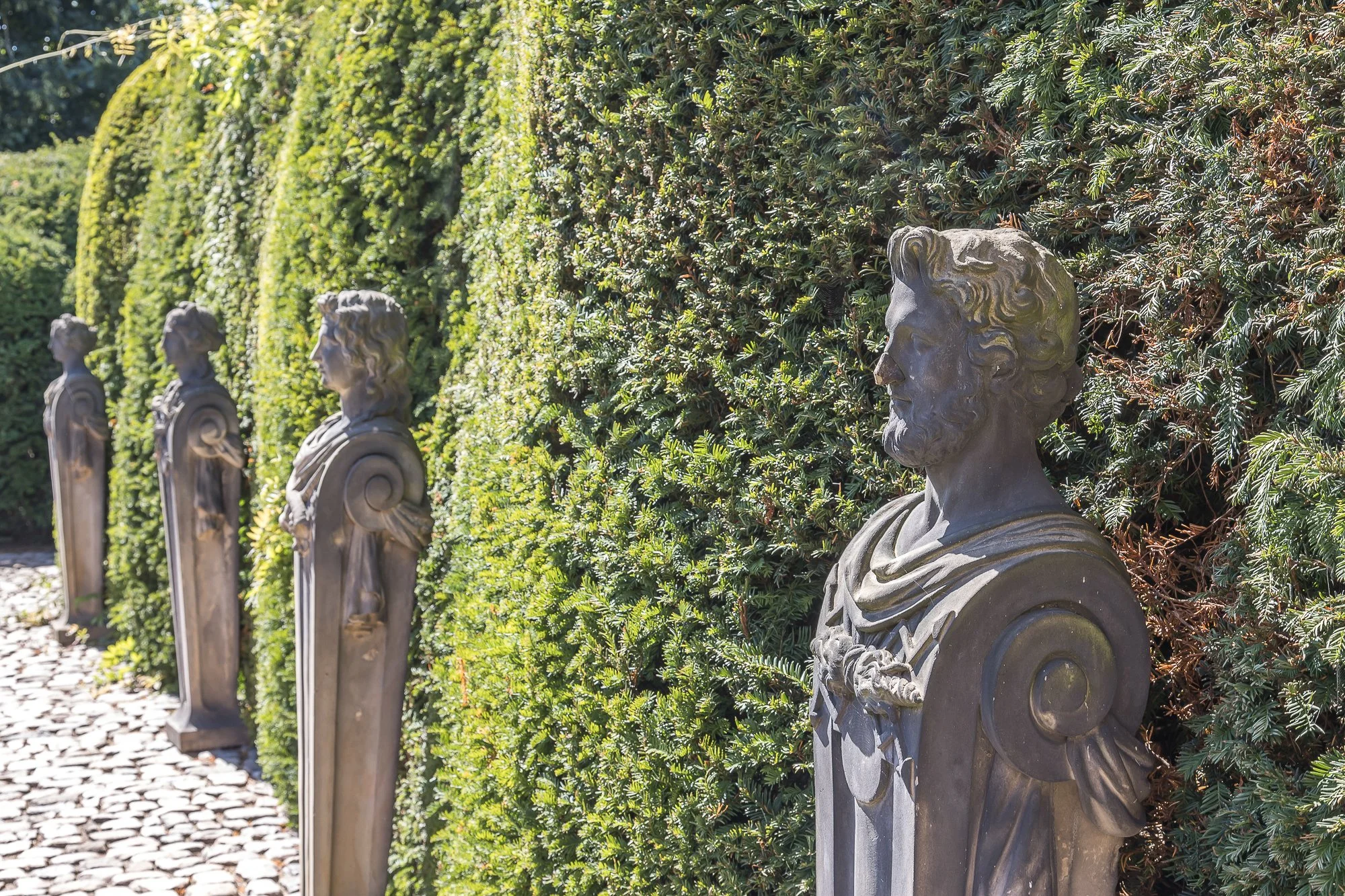
In the mid 17th century, Huis St Jan was joined to the Nieuwenhuis, built in 1550, to form the current enlarged house. The current owners inherited the house in 2000, engaged in an extensive restoration programme and established the rennaissance gardens to the rear and the landscaping of the old orchard which was conducted by the famous landscape architect Eric Dhont.